

Junk Removal
Apartment Turnover Junk Removal: How DFW Property Managers Turn Units Faster
Dialed In Pro Cleaning · September 16, 2026
Rather we did it?
Get a free quote
We cover the whole Metroplex and most quotes go back the same business day.
Every vacant day on a unit is rent that does not come back. In a Dallas-Fort Worth market where a community in Lewisville or Irving might turn a dozen units in a single month, the gap between move-out and make-ready is where the money leaks.
The slowest part of that gap is rarely the paint. It is the stuff the last tenant left behind: the sofa that would not fit the truck, the mattress, the bags in the closet, the patio furniture. Until it is gone, the cleaners cannot clean and the painters cannot paint. This is how property managers across the Metroplex have started treating junk removal as a scheduled trade rather than an emergency call.
Why abandoned property slows the make-ready
A make-ready is a sequence. Junk out, then repairs, then paint, then clean, then carpet or floors, then inspection. Every trade is booked around the one before it. When a unit turns out to be full of abandoned furniture, the maintenance team either spends a day hauling it themselves, which pulls them off work orders, or the whole sequence slides while a hauler is found.
The communities that turn fastest have taken the surprise out of it. They know which units are moving out, they know roughly how much is being left, and they have a hauler booked before the keys come back.
Three ways to schedule it
Different communities use different models, and most settle on a mix.
Scheduled full-service sweeps
A crew visits on a fixed day, usually the first business day after a move-out cluster, and clears every vacant unit on the list. The maintenance team never touches abandoned property. This suits large communities in Irving, Arlington and Lewisville with predictable turnover.
A standing self-load trailer
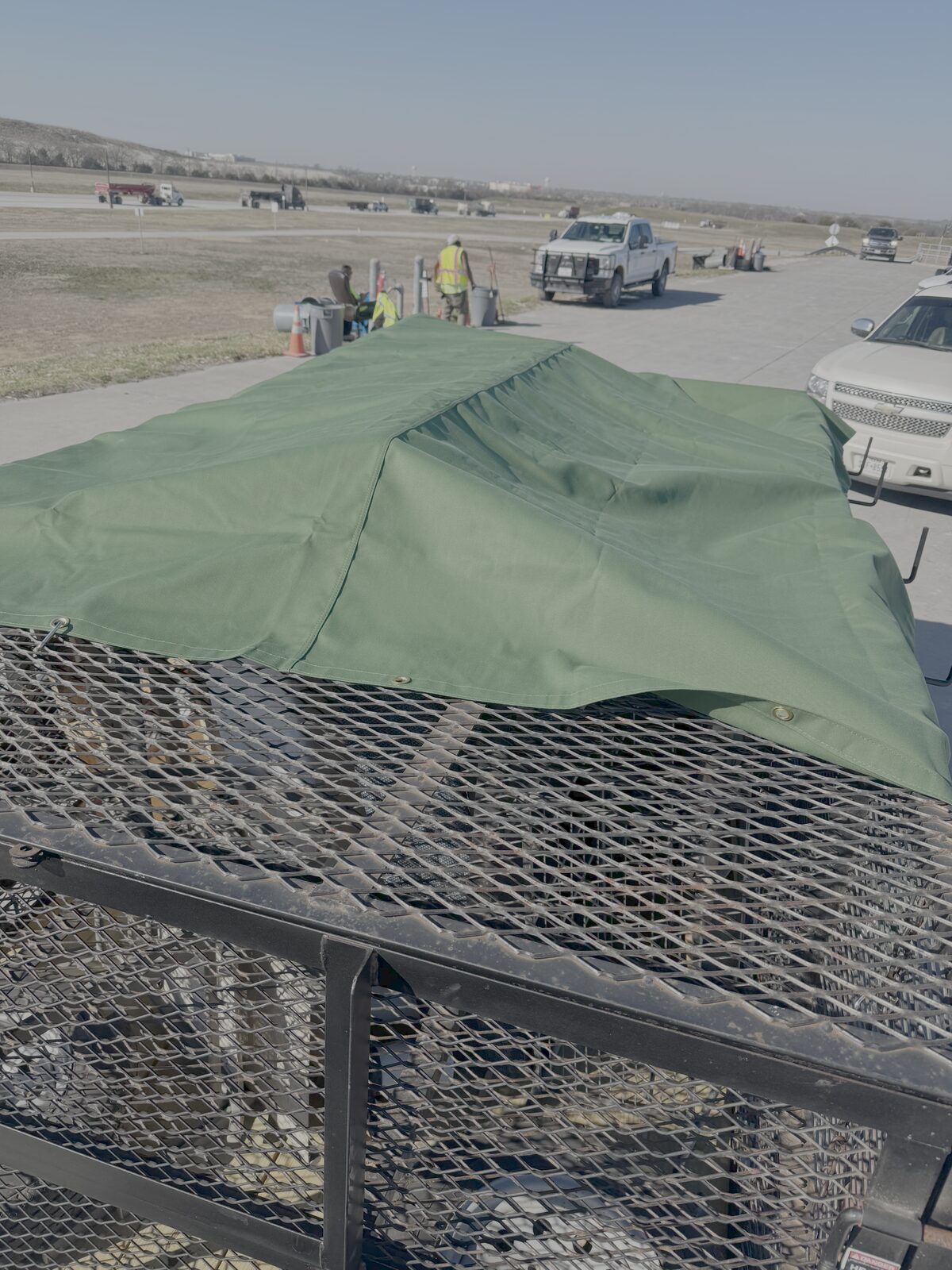
A trailer is dropped at the maintenance yard or a designated spot in the lot for the turnover week. Maintenance staff load abandoned items as they open units, and we swap or haul the trailer when it is full. Labor stays in-house, disposal and hauling do not. This is the cheapest model per unit and the one we see most in mid-size communities across Plano and The Colony. Read how self-load works.
On-call with a service agreement
For smaller properties, a simple agreement with agreed pricing and a next-day response window is enough. The value is not having to re-quote and re-explain the property every time.
What gets left behind in DFW apartments
Furniture is the largest category by volume: sofas, sectionals, bed frames, dressers and dining sets that will not fit a rental truck. Mattresses are the most common single item and carry a facility fee. Patio furniture and grills pile up on balconies in summer. Electronics, exercise equipment and boxes of household goods make up the rest. After eviction turnovers the volume is often double a standard move-out.
Keep the property looking leased
Nothing signals a struggling community like a mattress leaning against the dumpster corral for a week. Scheduled hauling keeps abandoned items out of sight of prospective tenants and out of the way of the trash contractor, who will not take bulk items anyway. Combined with regular porter service for breezeways, stairwells and amenity areas, the community photographs the way the leasing office wants it to.
Documentation for owners and asset managers
Owners want to know what was removed, from which unit, and what it cost. We photograph each unit before and after, provide a per-unit line on the invoice, and note anything diverted to donation or recycling. For eviction turnovers where abandoned property rules apply, that record matters.
Pricing that works at portfolio scale
Turnover junk removal is priced by volume like any other haul, but a community with steady turnover should not be paying one-off rates. Portfolio agreements across multiple DFW properties, standing trailer arrangements and predictable scheduling all bring the per-unit cost down. Tell us how many units you turn in a typical month and where the properties are, and we will build the quote around it. Start on our multi-family page or request a property assessment.